Technology and engineering
This page is the engineering record: how a sensor is calibrated, how it is made small enough to place, how it stays on a battery, and who builds and supports it. The short proof on the innovation landing page is a different page.
Advanced sensor engineering
The Z Sensor accepts NIST-calibrated probes, including a 2-year calibration and a glycol option that tracks a stored product more closely than bare air. The B2 Sensor uses an NSF-grade enclosure so it can live in food equipment. Readings are stored on the device and forwarded when the gateway returns, which is the difference between a missed log and a gap in an audit.
Miniaturization and placement
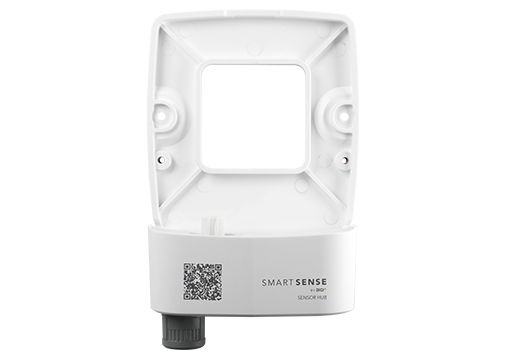
Placement is the engineering problem. The B2 Sensor is 2 inches square so it can sit in the warmest part of a refrigerator instead of on a shelf that is easy to reach. The T1 Sensor is an ultra-low-profile device because it travels with the asset. Gateway enclosures are specified per model, from the BZ Gateway at 3.9 by 3.9 by 1.6 inches to the ZE Gateway at 7.22 by 3.85 by 1.20 inches.
Battery life and wireless technology
Published battery life depends on the job. The Z Sensor is specified at 5 years. The B2 Sensor is specified at up to 4 years. Gateway backup is measured in hours, not years: 24 hours or more on the BZ Gateway, and 24 to 48 hours on the ZE Gateway, so a power cut does not erase the interval. Radios are chosen the same way. LTE and LTE-M where there is no local network, Ethernet where there is a drop, and Bluetooth or Zigbee between the sensor and the gateway.
Manufacturing and product development
Serviceability is part of the design. A Z Sensor probe twists off for NIST recalibration, so the sensor body stays in place. B2 software can be updated over the air. Gateway specs call out locking power cables, IP67 on the BZ Gateway, and an operating range printed on the product page so an installer can see the limit before the device is on a wall.
The people behind the innovation
Hardware, firmware, manufacturing, and customer teams share the same product names a buyer sees on these pages. Leadership and open roles are published on their own pages, with the people named there.